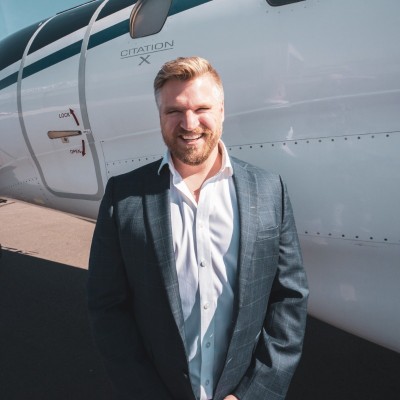
Private aviation isn’t just about luxury, it’s about efficiency, access, and relationships. In this episode, Tim sits down with Pat Sinnott, founder of Peak Aviation, to break down how private jet travel actually works, from empty leg flights to charter pricing and everything in between. Pat shares how his Bozeman-based company connects travelers with aircraft across the country, and what it takes to build a business in one of the most complex, relationship-driven industries out there.
Listen on:
YouTube
Spotify
Apple Podcasts
What Peak Aviation Actually Does
Peak Aviation operates as a third-party broker and consultant, connecting clients who need private flights with operators who have aircraft available. Instead of owning planes, they focus on relationships, logistics, and finding the best possible option for each trip.
It’s similar to a travel agent, but far more complex. Every flight involves safety checks, operator vetting, pricing comparisons, and real-time logistics. The goal is simple, make private aviation more accessible and efficient while maintaining a high standard of service.
Empty Legs, Flying Private for Less
One of the most interesting parts of the conversation is “empty legs,” also known as deadhead flights. These happen when a jet needs to reposition for its next trip, often flying empty.
Peak Aviation gives clients access to hundreds of these opportunities daily, allowing people to fly private at a fraction of the normal cost.
The tradeoff is flexibility.
These flights depend on the original owner’s schedule, so times can change, or flights can be canceled entirely. But if you can work within those constraints, it’s one of the smartest ways to access private aviation.
How Private Jet Pricing Really Works
A big misconception is that private aviation is one-size-fits-all. In reality, pricing varies widely depending on the type of aircraft, route, and usage.
Pat breaks it down into a few main models:
- One-off charter flights
- Jet cards, buying flight hours in advance
- Fractional ownership
- Full aircraft ownership
For example, a same-day round trip from Bozeman to Kalispell might run around $6,500 to $7,500 on a smaller aircraft, largely because you’re paying for the plane to travel both directions regardless.
It’s not just about distance, it’s about logistics, availability, and how efficiently that aircraft can be used.
The Logistics Behind the Scenes
Much like transportation on the ground, private aviation is full of moving parts. Weather delays, schedule changes, aircraft availability, and even owner decisions can all impact a trip.
That’s where Peak Aviation adds value. They act as the middle layer, managing those variables, advocating for clients, and working directly with operators to keep everything running smoothly.
It’s also why relationships matter so much. Pat emphasizes working with trusted operators and maintaining consistency, because at the end of the day, the client experience depends on it.
Building a Business in Aviation
Pat didn’t start Peak Aviation from scratch without experience. He spent eight years working at an aviation company before branching out on his own, eventually buying out his investor and running the company independently.
Like most businesses, the early years were about figuring things out, learning marketing, building systems, and growing through relationships rather than shortcuts.
Now, with a foundation in place and a small team growing, the focus is on scaling while maintaining the same level of service that built the business in the first place.
Why Bozeman Works for This Industry
Even though Peak Aviation operates nationally and globally, Bozeman plays a unique role. About 30% of their business is tied to the area, with the rest spread across the country.
The demand here is driven by destination travel, people coming to Big Sky, Yellowstone, and surrounding areas. And like many businesses in Montana, the relationships and reputation you build locally carry a lot of weight.
Peak Aviation is a great example of a business that operates behind the scenes but plays a critical role in how people experience travel at a high level. Whether it’s saving time, accessing remote locations, or simply making the process smoother, it’s all about connecting the right people with the right resources at the right time. https://flypeak.com/
Mountain Mule Media is all about sharing conversations like this, highlighting Montana businesses, the people behind them, and the stories that connect them. If you’re traveling through Bozeman, whether it’s for airport transfers, weddings, events, or Yellowstone National Park tours, you can learn more at https://www.mountain-mule.com and see how Mountain Mule Transportation can help make your experience seamless.


